Country Head Says Stability Is Not Enough for Lasting Growth
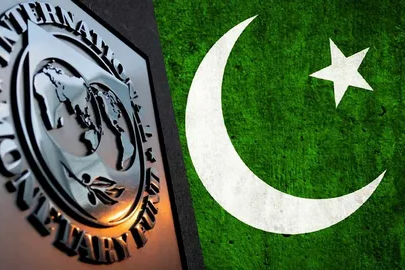
The IMF’s Pakistan representative, Dr Mahir Binici, urged Pakistan on Thursday, 5 November 2026, to broaden its tax base and pursue deeper reforms. He praised the country’s efforts to keep the economy stable but said stability must now turn into sustainable growth. He said growth is rising from 2% to 3.5%. The remarks came during Pakistan’s ongoing $7 billion IMF programme.
Background: The Programme and Its Conditions
Pakistan entered a 37-month Extended Fund Facility (EFF) in September 2024, worth about $7 billion. It also has a 28-month Resilience and Sustainability Facility (RSF) of about $1.4 billion for climate-related reforms. The IMF board completed the third EFF review on 8 May 2026, allowing Pakistan to draw about $1.32 billion across the two arrangements and bringing total disbursements to around $4.8 billion.
Pakistan and the IMF have also agreed to keep monetary policy tight. In May, Dawn reported they agreed to maintain a tight stance and treat a primary surplus target of 2% of GDP for the next fiscal year as essential. The State Bank of Pakistan said it was committed to keeping policy appropriately tight to anchor inflation expectations, and in April it said it was ready to raise rates if needed.
Details: What Binici Said
Five Areas for Growth
Binici spoke at a session titled “Where Reforms Matter the Most for Growth?” at a sustainable development conference organised with the Ministry of Finance. He outlined five areas that could improve growth prospects, including preserving macroeconomic stability and building the foundations to move from stabilisation to sustainable growth. He said investment in people was a critical part of growth-oriented reforms.
Tax and Trade
He asked for continued efforts to raise tax collection and improve the tax-to-GDP ratio, which is about 10 to 11%. The IMF has urged Pakistan to move towards 15%. Pakistan Observer also reported that he called for under-taxed sectors to be brought into the tax net, more women in the workforce and stronger export-oriented policies. He said the National Tariff Policy had helped the economy.
Growth Despite the Regional Crisis
Binici said Pakistan has moved from an economic crisis towards stability. He welcomed continued progress despite the Middle East crisis and said meetings with the authorities on raising revenue had been underway for months. The IMF, he said, would keep working with Pakistan over the long term.
Earlier Messages From the Fund
On 20 and 21 October, the Ministry of Finance and the IMF held a workshop in Islamabad on tax reform. IMF Middle East and Central Asia Director Jihad Azour said Pakistan’s stabilisation gains created an opportunity that needed to be amplified through transformative reforms. He called for a broader tax base, stronger revenue administration and fewer tax concessions.
Finance Minister Muhammad Aurangzeb also spoke at that workshop and pledged more predictable tax policies. Azour identified four themes for reform: credibility, growth, fairness and implementation.
Impact: Why It Matters
For Pakistan, the message is that the next stage will be harder than the first. Stabilising the economy involved controlling inflation and rebuilding reserves. Moving to stronger growth means changing how the state raises money, which is politically difficult and affects many sectors.
For the programme, the IMF’s current review is still open. Pakistan and IMF staff reached an agreement on 7 October on the fourth EFF review, which would unlock about $1.2 billion. That deal still needs approval from the IMF Executive Board, and I found no report yet that it has been approved.
Conclusion: What Comes Next
The immediate step is the board’s decision on the fourth review. After that, attention turns to the next fiscal year’s budget and how far the government goes on tax reform. The IMF is likely to keep pressing for a wider tax base while Pakistan balances growth, revenue and the pressures from higher energy prices.
For now, the Fund’s message is that stability is a base to build on, not a finishing line.
FAQs
Can Pakistan exit the IMF?
Yes, in principle. IMF membership and borrowing are voluntary, and a country can finish a programme and choose not to ask for another. Pakistan’s current EFF runs for 37 months from September 2024, so it ends in late 2027. Prime Minister Shehbaz Sharif said when it was approved that he hoped it would be Pakistan’s last programme. Exiting in practice depends on whether Pakistan can raise taxes, build reserves and borrow elsewhere without help. Reports say Pakistan has entered more than 20 IMF programmes, so the pattern shows how hard that is.
How much money will the IMF give to Pakistan?
Under the current arrangements, the IMF has committed about $7 billion through the EFF and about $1.4 billion through the RSF, a total of roughly $8.4 billion. Disbursements come in instalments after each review. By May 2026, about $4.8 billion had been released under the two programmes, according to the IMF’s statement. A further tranche of about $1.2 billion is expected after the fourth review, if the Executive Board approves it. Figures vary slightly between reports, so check the IMF’s latest statement.
What is the amount of IMF loan Pakistan will receive in 2026?
In 2026 so far, the biggest release was about $1.32 billion in May, which included roughly $1.1 billion under the EFF and $220 million under the RSF. A December 2025 tranche of about $1.2 billion was approved just before the year ended. The fourth review, agreed by staff on 7 October, would add roughly $1 billion under the EFF and about $210 million under the RSF. That is subject to board approval, so the 2026 total depends on that decision.
How much debt does Pakistan have to pay to the IMF?
According to the Economic Survey 2025-26, Pakistan’s outstanding liabilities to the IMF were $9.89 billion at the end of March 2026. That is about 11% of its external public debt of $92.2 billion. Of the IMF total, $3.62 billion is owed by the federal government and $6.27 billion by the State Bank of Pakistan. Repayments are spread over several years. For example, Pakistan repaid about $81.9 million in the first two months of 2026. Check the latest State Bank data for current figures.